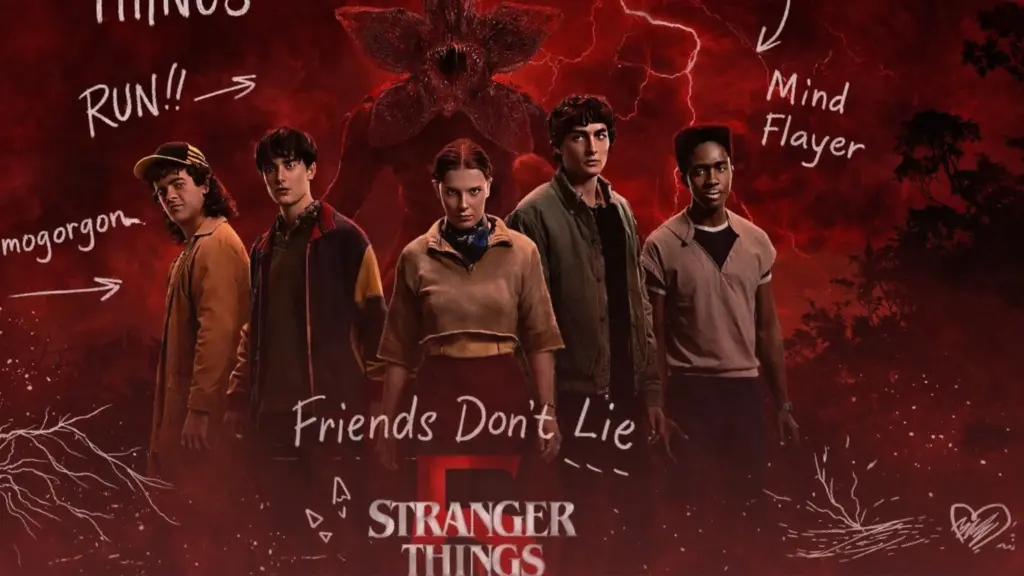
While Stranger Things is best known for its supernatural mysteries, government experiments, and eerie monsters, the series also hides a subtle yet powerful layer of storytelling through handwriting, symbols, and written communication. Below are the key moments where writing traditional or symbolic, reveals something deeper about the characters’ emotional worlds. While Graphology provides a unique interpretive lens, please note this is an analogical reading of fictional elements, not a scientific psychological assessment.
This graphological reading offers a unique perspective, it is a fun, interpretive analysis and is not meant to be a psychological assessment of the characters.
Beyond the Supernatural: What the Writing in Stranger Things Reveals About Its Characters
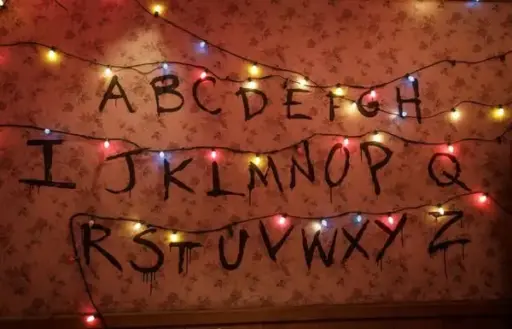
1. Joyce’s Wall Alphabet: Large Letters as an Explosion of Emotion
The giant alphabet that Joyce paints on her living room wall in Season 1 is a powerful visual form of “handwriting” driven by emotional urgency. In Graphology, oversize and heavily pressure writing often reflects intense emotion, anxiety, and a desperate need for expression. As a result, Joyce transforms her fear into a visual outburst, turning her walls into loud, frantic messages that mirror her emotional state.
Beyond the Supernatural: What the Writing in Stranger Things Reveals About Its Characters
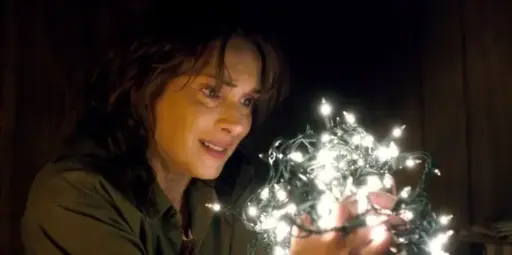
2. Will’s Morse Code: Rhythm, Pressure, and Communication Under Crisis
When Will communicates through flashing lights in Morse Code. In graphology, rhythm, tempo, and pressure play crucial roles in revealing emotional states, and Morse Code can be analyzed using similar principles. The frantic, repetitive, and urgent flashes reflect Will’s fear and desperation. Ultimately, Will channels his emotions into a stripped-down writing system that carries the weight of his distress.
Beyond the Supernatural: What the Writing in Stranger Things Reveals About Its Characters
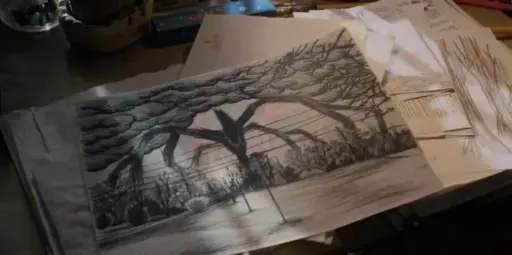
3. Will’s Drawings and Sketches: Sensitivity and Visual Imagination
Will’s sketches function much like handwriting because they reveal motor patterns, pressure, and expressive control. When he begins to fall under the influence of the Mind Flayer, his drawing style drastically shifts into repetitive, harsh, and compulsive strokes. His drawings visually record this emotional disruption, showing how his artistic expression transforms as his internal struggle grows.

Beyond the Supernatural: What the Writing in Stranger Things Reveals About Its Characters
4. Jonathan Byers Writing About Will’s Disappearance: Steady Letters Hiding Inner Fear
When Jonathan writes about Will’s disappearance. When Jonathan writes about Will’s disappearance, he uses controlled and orderly handwriting to maintain composure for his family. Yet small signs, like uneven pressure or slightly tight spacing reveal the fear and guilt he tries to suppress. In Graphology, this mix of steadiness and hidden strain reflects someone who holds himself together on the surface while wrestling with heavy emotions underneath.
Conclusion
Stranger Things offers far more than supernatural thrills, it also weaves emotional storytelling through writing, symbols, and visual communication. Through a graphological perspective, every stroke, dot, and line reveals a deeper layer of meaning, turning the show’s visual elements into emotional footprints.
Ready to uncover handwriting clues? You don’t need to dive into the Upside Down to decode hidden meaning. You can start uncovering the insights hidden in real-life handwriting today. Get your free personalized insights into what your handwriting reveals by signing up for the KAROHS Sunday Lesson https://karohs.school/catalog/sunday-lessons/