Many people begin journaling for self-awareness without realizing it. Writing is often seen as a space for emotional release, a way to process thoughts when the mind feels crowded. Yet when practiced consistently, journaling becomes more than an emotional outlet. It becomes a pathway to understanding yourself beyond temporary emotions.
When you journal, you are not only recording what you feel. You are also leaving traces of how you think, how you respond and how you internally navigate experiences. In this sense, journaling is not merely about ‘what’ is written, but also about ‘how’ it unfolds on the page.
Journaling as a Record of Inner Patterns
Emotions shift, but patterns tend to repeat. When you revisit past journal entries, recurring themes often begin to surface such as similar concerns, familiar conflicts or long-standing aspirations. These patterns reveal underlying values, fears and motivations that quietly shape your personal identity.
Writing slows down the mind. Thoughts that feel overwhelming internally often become clearer once expressed on paper. Journaling also has a functions for self-awareness as a reflective mirror, allowing you to observe your inner world with greater clarity and perspective.
From Words to Movement
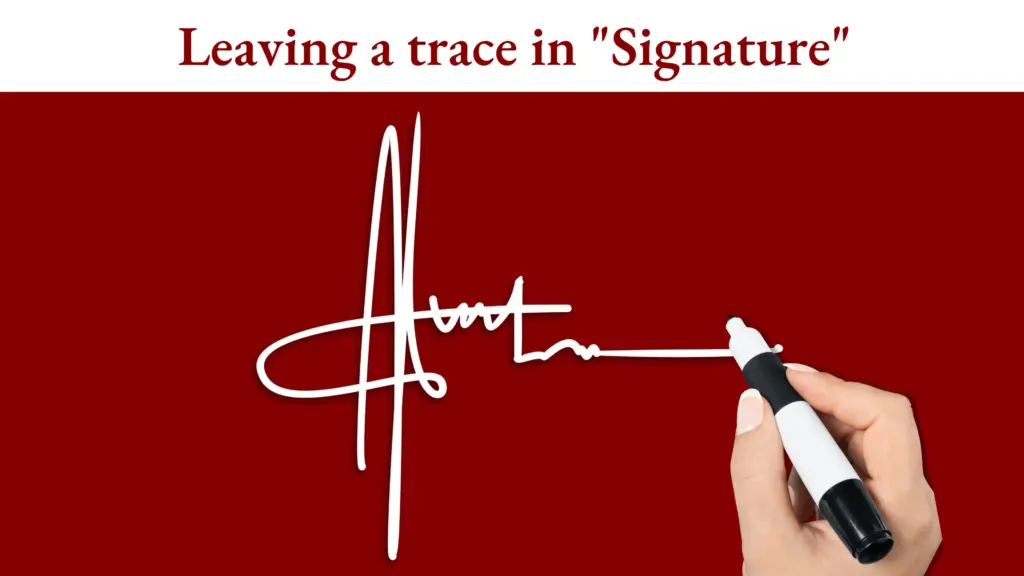
Beyond the written content, there is another dimension that often goes unnoticed which is handwriting itself. Writing by hand engages the brain, emotions and motor coordination simultaneously. Because of this connection, internal states such as tension, confidence, hesitation or mental fatigue can subtly influence the appearance of your writing.
In graphology, handwriting is understood as a form of behavioral expression. Elements such as pressure, spacing, rhythm and consistency may reflect how a person processes experiences in a given moment. When journaling becomes a regular practice, handwriting turns into an ongoing record of inner movement, not only emotional expression.
Handwriting as a Bridge to Deeper Self-Awareness
When journaling for self-awareness is combined with handwriting awareness, the reflection becomes more comprehensive and structured. Journaling captures your thoughts. Handwriting analysis explores how those thoughts are physically expressed. Together, they provide a more comprehensive understanding of the self.
For instance, shifts in writing pressure or spacing across different journal entries may indicate changes in emotional energy, personal boundaries or mental focus. These variations are not labels of fixed personality traits. Instead, they offer insight into internal dynamics that may be difficult to articulate consciously.
At this point, journaling evolves from a simple emotional outlet into a structured tool for self-observation.
Journaling as a Reflective Practice
In conversations about self-development and mental clarity, journaling is frequently recognized as a meaningful reflective practice. Elizabeth Gilbert have spoken about journaling as a way to clear mental noise and reconnect with personal direction. While these perspectives are often shared in reflective contexts rather than clinical frameworks, they reinforce an important idea that writing helps individuals understand themselves beyond immediate emotion.
When combined with awareness of handwriting, journaling becomes an even more holistic practice which is one that integrates both cognitive and physical expression.
From Awareness to Personal Growth
Understanding yourself is not about controlling every emotion or eliminating discomfort. It is about recognizing internal patterns and responding to them intentionally. Journaling, when paired with handwriting awareness, supports this process in a grounded and manageable way.
Over time, you begin to trust your internal signals more deeply. Writing becomes less about releasing emotion and more about cultivating clarity, insight and personal mastery.
Journaling for self-awareness as a Practice of Growth
There is no need for perfect structure or polished language. Journaling works best when it is honest and consistent. Each page becomes part of an evolving archive of self-knowledge both in words and in form.
By paying attention not only to what you write, but also to how you write, journaling for self-awareness can become a powerful pathway to understanding yourself beyond emotions.
Curious about what your writing reveals about you?
At Karohs School, handwriting analysis are explored as structured tools for deeper self-awareness, clarity and personal empowerment. If you are ready to move beyond emotional release and step into conscious growth, join the Comprehensive Course and experience writing as a pathway to mastery.
Start your journey today.