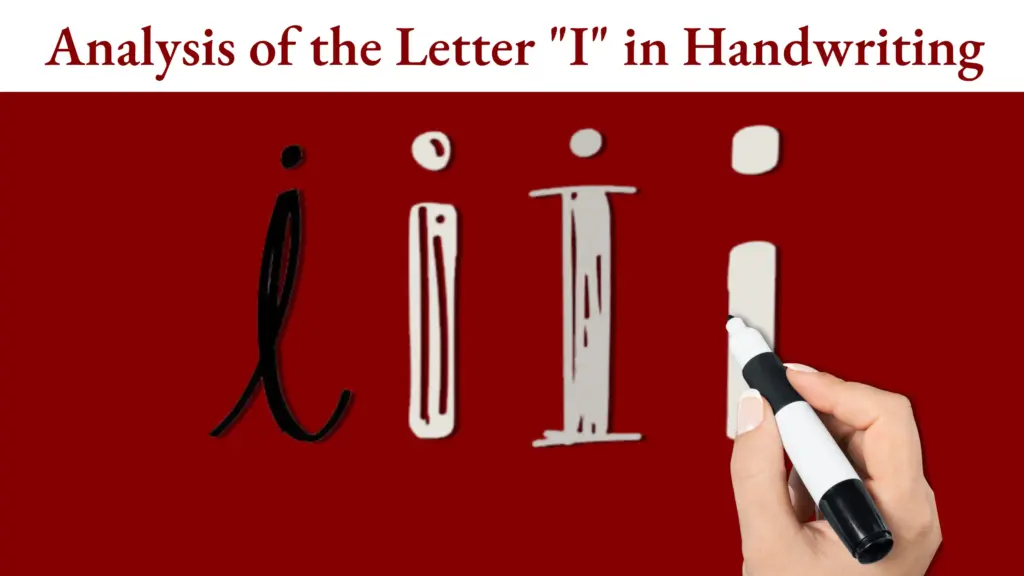
Turns Out, Your Handwriting Might Be Your Real Resume
In a world full of LinkedIn profiles, AI resumes, and even ChatGPT written cover letters, there’s still one thing you can’t fake, which is your handwriting.
Turns out, some HR professionals are bringing Graphology back.
Not to judge your cursive skills, but to peek into your personality. Your handwriting, from that quick note you scribble or the way you sign your name, can reveal how you think, feel, and handle pressure.
So… Why Are HR’s Even Doing This?
Let’s be real, most recruiters already stalk your LinkedIn or Instagram to see “who you really are”. But handwriting analysis takes it one step further.
Graphology (the study of handwriting and personality) helps HRs understand things that digital tests can’t, like emotional stability, confidence, creativity, and even how you handle stress.
Some companies use handwriting insights for:
- Leadership roles → Is this person decisive or overly cautious?
- Teamwork-heavy jobs → Are they expressive and empathetic?
- High-pressure environments → Do they stay calm or lose control under stress?
Basically, it’s like a psychological mirror but in ink, handwritten ones.
Your Handwriting Might Say About You
The following is an example of how HR analyzes you through your handwriting.
1. Handwriting on the letter e
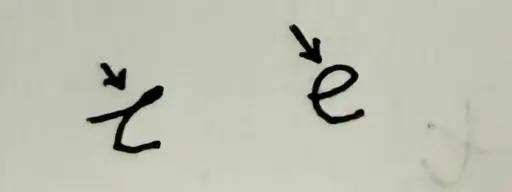
- E with a holes means broad minded, can listen to other people’s opinions first.
- E with no holes means narrow Minded, a bit difficult to accept input because it feels like it’s already the most correct.
- Handwriting on the letter n
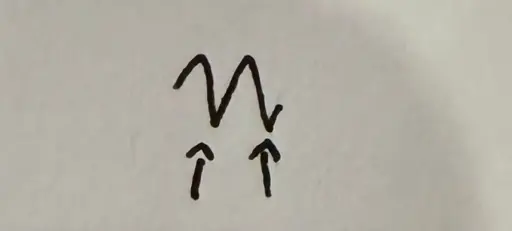
N with below sharp edges means likes to analyze the information received, doesn’t believe easily, and always wants to know the cause and effect
- Handwriting on the letter t
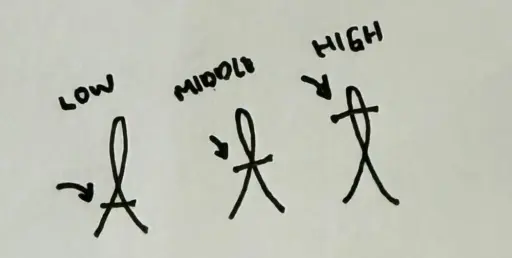
- T-bar high means ambitious or visionary, likes challenges, has a strong drive to succeed, optimistic and confident.
- T-bar middle means realistic, practical, set achievable goals, tend to be consistent.
- T-bar low means lack of motivations or experiencing a drop in spirit, focus on basic needs or comfort, and might be in a reflective or defensive phase.
Of course, these aren’t “tests”, they’re signals. But first impressions matter, and handwriting still has a vibe.
How to Use Graphology to Discover & Grow Your Potential
- Start by reading your own handwriting.
Look at your daily notes or journaling pages, notice the size, spacing, pressure, and slant. Each trait reflects a part of you: confidence, focus, creativity, or emotional balance.
- Identify your strongest traits.
Ask: What do my strokes say about how I think or work?
- Has a sharp corner at the bottom of the letters m & n → analytical person, likes to think in detail and logically
- E’s letter is closed or there is no hole → narrowminded
- High T-bar → ambitious and likes challenges.
Once you know your dominant traits, match them with your strengths in study, career, or creativity.
- Spot your growth areas.
If your writing looks tense, messy, or inconsistent, it might signal stress, overthinking, or imbalance. Graphology helps you see what needs alignment, not to judge, but to adjust.
- Learn from certified graphologists.
Join online or in-person classes (like at Karohs International School of Handwriting Analysis) to understand how strokes translate into psychological meaning.
It’s not just about analyzing others, it’s about mastering your own inner map.
In a world where everything is typed and filtered, handwriting is your analog fingerprint, raw, real, and uniquely you. So next time you jot down notes during an interview or sign a document, remember, your handwriting is silently speaking for you.
Know more about how to improve or read your handwriting with joining our Applicative Course Applicative Course by KAROHS and visit our website at https://karohs.school/courses/