What This Article Helps You See
- This article explains why ethical handwriting analysis in recruitment must remain a complementary perspective, not a replacement for interviews, references, or structured assessment.
- It clarifies that responsible candidate insight depends on consent, contextual reading, and holistic interpretation rather than judging a person from one isolated handwriting feature.
- It shows how proper education in handwriting analysis protects fairness, supports human dignity, and encourages reflective use in workplace conversations.
Recruitment often sits between two important duties: understanding people more deeply and remaining fair, structured, and evidence-aware in decision-making. As reflected in You are not the person you see in the mirror – IAI TV, self-perception is not always complete, and first impressions are rarely enough. That is why ethical handwriting analysis deserves careful discussion in modern recruitment: it may offer supplementary insight into workplace tendencies, but only when used with consent, context, and professional restraint.
Why recruitment needs ethical boundaries around human insight
Hiring professionals are often under pressure to understand more than a CV can show. They want to explore communication style, adaptability, emotional steadiness, or personal discipline without reducing a candidate to surface impressions. This is where curiosity about handwriting analysis for HR may arise. Yet the need for deeper understanding never removes the duty to stay fair.
Ethical handwriting analysis should never replace interviews, references, role criteria, or structured assessments. Used irresponsibly, it can become a shortcut that oversimplifies people. Used responsibly, it can serve as one complementary lens among several. That boundary matters because recruitment decisions affect livelihoods, dignity, and trust.
In practice, handwriting analysis works best when it helps shape better questions rather than final judgments. A recruiter may use it to reflect on tendencies that could be explored further in conversation, not to decide who is suitable in isolation. Readers interested in this balance may also appreciate KAROHS guidance on observing handwriting without making the process intrusive.
What ethical handwriting analysis actually means in candidate assessment
Ethical handwriting analysis begins with consent. A candidate should understand why handwriting is being considered, how it will be used, and what its limits are. Without transparency, the process can feel invasive or unprofessional. With transparency, it becomes easier to maintain trust and keep the discussion grounded.
It also requires contextual reading. A handwriting sample does not speak for a whole person on its own. Writing conditions, stress, time pressure, physical comfort, language habits, and cultural background can all influence the page. For that reason, responsible personality insight must remain tentative. It may suggest patterns or preferences, but it should not be treated as fixed truth.
Holistic interpretation is equally important. No ethical practitioner should judge a candidate from one sign, one stroke, or one visual feature. Meaning emerges through combinations, consistency, context, and comparison with broader behavioral evidence. This is especially relevant in hiring, where a role’s demands and the candidate’s lived experience matter as much as the sample itself. A related KAROHS article on job fit and handwriting analysis further explores why careful interpretation matters.
When handled responsibly, workplace behavior insight from handwriting may support richer interview questions. For example, if a sample appears to suggest a strong need for structure or a fast pace of mental processing, that impression should be explored through real examples from the candidate’s work history. It should never stand alone as proof.
How responsible learning protects both recruiters and candidates
One of the greatest risks in recruitment is not the tool itself, but untrained use of the tool. Without proper learning, people can overread small details, apply generic meanings, or project personal bias onto a sample. That creates unfairness for candidates and false confidence for recruiters.
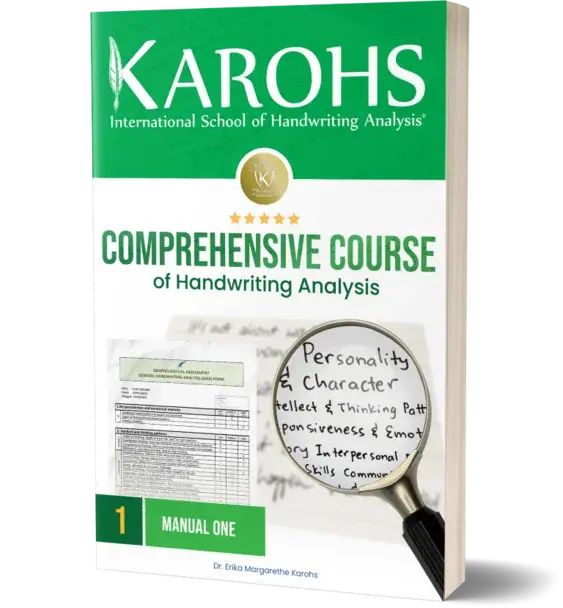
Professional education helps prevent this. A structured approach teaches learners to interpret handwriting contextually, avoid exaggerated conclusions, and respect human dignity throughout the process. KAROHS emphasizes exactly this kind of ethical foundation, including the importance of learning handwriting analysis responsibly and studying it as a disciplined, reflective practice rather than a collection of simplistic signs.
For HR professionals and managers, this matters because hiring should remain both human and accountable. Handwriting analysis can add value when it encourages curiosity, supports nuanced discussion, and stays within clear ethical boundaries. It becomes most useful when paired with strong recruitment practice, not when used as a replacement for it.
Those who want a deeper professional base may also explore why comprehensive study matters in fields connected to people assessment, as discussed in this KAROHS piece on the value of thorough handwriting analysis education. In modern recruitment, the real question is not whether insight tools exist, but whether we use them with enough discipline to protect fairness, context, and human respect.
Questions About This Topic
Can handwriting analysis be used to make final hiring decisions?
No. Ethical handwriting analysis should not be used as a stand-alone decision tool. In recruitment, it is best treated as a complementary perspective that may inform follow-up questions alongside interviews, references, role criteria, and structured assessment methods.
Why is consent important when using handwriting analysis in recruitment?
Consent helps protect trust, transparency, and professional boundaries. Candidates should understand why a handwriting sample is being considered, how it may contribute to the process, and what its limits are. Without that clarity, the practice can feel invasive or unfair.
What makes a handwriting interpretation ethical in candidate assessment?
An ethical interpretation is contextual, holistic, and restrained. It does not label a candidate from one isolated sign or claim certainty from a single sample. Instead, it considers writing conditions, broader patterns, and other evidence before suggesting possible tendencies.
Can handwriting analysis reveal workplace behavior insight without being intrusive?
It can offer limited and complementary insight when used respectfully and professionally. The purpose should be to support better questions and deeper understanding, not to invade privacy or reduce a person to handwriting traits. Responsible use depends on boundaries and proper training.
Do recruiters need formal learning before applying handwriting analysis?
Yes. Professional learning is important because untrained interpretation can lead to bias, overconfidence, and unfair conclusions. Structured education helps recruiters and managers understand ethical limits, contextual reading, and how to avoid oversimplifying people.
Study Handwriting Analysis with KAROHS
If you want to explore how handwriting analysis can be applied responsibly in professional settings, the KAROHS Applicative Course offers a structured next step. It is designed for learners who want practical insight with ethical discipline, contextual interpretation, and real-world relevance.