Have you ever noticed that some people write with letters leaning to the right, while others keep them upright or even slightly tilted to the left? At first glance, it may seem like nothing more than a personal writing habit. However, in handwriting observation, handwriting slant is often viewed as more than a stylistic choice.
Writing is not created by the hand alone. It emerges through coordination between thought, movement and emotional responses. Seeing that, the way writing naturally leans can sometimes reflect how someone tends to express or process emotions.
Of course, a single handwriting feature never tells the whole story. Handwriting is always observed as a combination of patterns rather than one isolated sign. Still, slant can offer an interesting place to begin.
Right Slant: Moving Toward Emotion
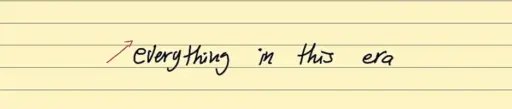
When handwriting leans toward the right, it is often associated with a tendency to move outward emotionally. Individuals with this pattern may be more expressive and more likely to respond directly to people or situations around them.
This does not necessarily mean someone is highly emotional. Rather, emotions may be processed through interaction and expression instead of being kept entirely inside.
Vertical Slant: Between Emotion and Logic

Vertical handwriting tends to appear more balanced. The writing neither moves strongly toward emotion nor strongly away from it.
This pattern is often associated with individuals who try to keep emotional responses and rational thinking working together. Rather than reacting immediately, they may prefer to observe and process situations before responding.
Left Slant: Holding Emotion Inward
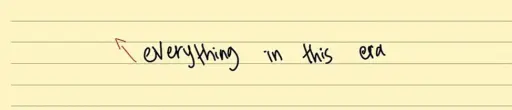
When handwriting leans toward the left, it is often connected with a tendency to process emotions more internally. Rather than immediately expressing what they feel, individuals with this pattern may take time to reflect before sharing their thoughts or reactions.
This does not automatically suggest distance or emotional coldness. Sometimes it simply reflects a preference to understand emotions privately before expressing them outwardly. No slant is better than another. Right, left or vertical are not categories of good or bad personality. They simply remind us that people express emotions differently.
Perhaps that is what makes handwriting slant interesting. Behind something as simple as the direction of a line, there may be small traces of how we move through the world and how we connect with what we feel.
Sometimes understanding ourselves begins by noticing the smallest movements we never paid attention to before. Curious about what other patterns may quietly appear in handwriting? Lets, learn more about it in the Comprehensive Course Book.