We have all encountered someone whose emotional climate seems to shift without warning. One moment they are brimming with passion and enthusiasm; the next, they are withdrawn, irritable, or thoroughly grumpy—often with no visible trigger.
In popular culture, this unpredictability is perfectly captured by the famous book character Judy Moody, who can switch from passionately wanting to save the world to entering a total funk in a matter of seconds.
While dealing with unpredictable mood swings in fictional stories can be entertaining, navigating them in real life feels like a constant emotional rollercoaster.
The Hidden Nature of Moodiness
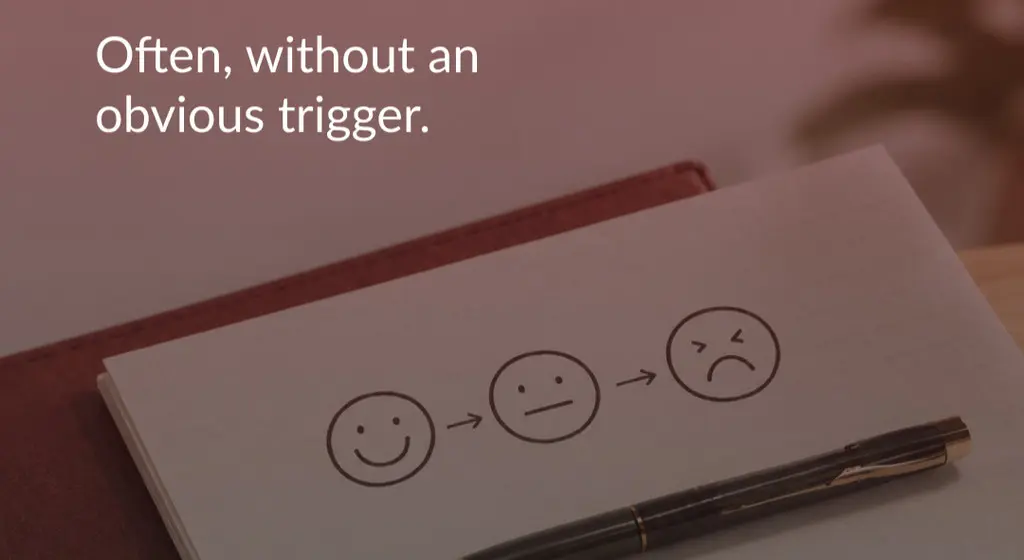
In real-life scenarios, adults rarely display their emotional shifts as openly as children’s book characters do. Many people learn to mask their inner frustration, sadness, or anger behind a polite, composed smile.
This raises a crucial question: What if you could identify an unpredictable temperament before the emotional storm actually hits?
While spoken words can easily conceal true feelings, the human subconscious mind leaves an unhackable footprint through handwriting.
Decoding the “Moody” Baseline in Graphology
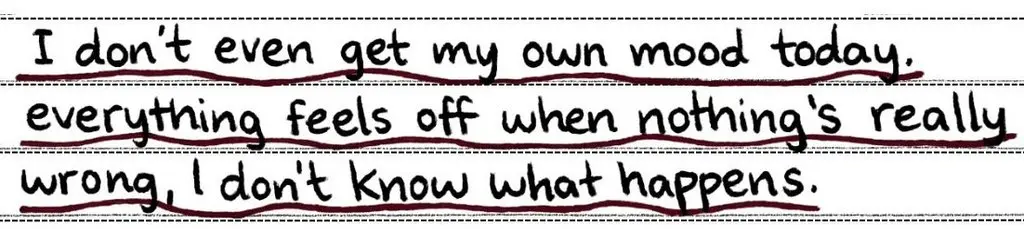
In handwriting analysis, one of the primary indicators of emotional consistency is the baseline—the imaginary line on which letters and words rest across a page.
When analyzing a person’s baseline, pay close attention to how straight or uneven the writing flows:
- The Wavy or Fluctuating Baseline: Words deviate drastically up and down across the line.
- What It Reveals: Individuals with a highly erratic baseline tend to lack emotional stability. Their temperament and daily reactions are heavily governed by shifting internal moods rather than logic or stable intentions.
Because handwriting is essentially “brain writing,” these physical fluctuations on paper mirror the fluctuating neurological and emotional states occurring within the writer’s subconscious mind.
The Golden Rule of Graphology
While spotting a wavy baseline offers immediate insight into someone’s emotional state, a professional graphologist never leaps to conclusions based on a single trait.
Important Note: A definitive personality profile always requires a holistic analysis of multiple handwriting indicators working together—including slant, pressure, spacing, and letterforms.
Self-Awareness: The Path to Master Your Mind

Beyond evaluating others, handwriting analysis serves as a powerful mirror for personal growth. Real emotional mastery begins with deep self-awareness. Before you can guide, lead, or evaluate those around you, you must first uncover and understand the hidden behavioral patterns within yourself.
Lead Yourself. By recognizing your own emotional triggers and subconscious tendencies, you gain the clarity needed to master your mind and elevate your relationships.
Take the Next Step in Graphology
Ready to master the science of identifying emotional patterns and profiling personality accurately?
Enroll in the KAROHS Applicative Course today and start reading between the lines!
Lead Yourself. Master Your Mind with KAROHS International School.