Every child is different. Some children express their thoughts and feelings openly, while others need time to open up.
Some are eager to try new things, while others prefer to observe before taking the step.
As a parent, we naturally want the best for our children. We want them to grow with confidence, discover their potential, and develop the skills they need to navigate life’s challenges.
But have you ever struggled to understand how your child behaves in a certain way?
Why does your child lose interest quickly when studying? Why do they become quiet around new people?
Or why does an approach work for another child seem ineffective with your own?
Understanding Your Child Goes Beyond Their Behaviour

Behaviour is often the first thing that parents notice. When a child refuses to follow instructions, we might see them as stubborn. When they don’t want to talk, we may assume they’re being uncooperative.
However, what we see on the surface doesn’t always tell the whole story.
A quiet child may need more time to feel comfortable. A child who asks many questions may have a strong sense of curiosity. Meanwhile, a child who gives up easily may need support in building confidence and learning how to face challenges.
Every behaviour needs to be understood in context, considering the child’s age, experiences, developmental stage, and circumstances.
That’s why understanding your child is more than just giving instructions. It also requires observing, listening, and learning to recognize their needs.
The Hidden Map in Your Child’s Handwriting

Long before children learn to articulate complex emotional states, their hands are already expressing them.
Every time a child picks up a pen to write or draw, their brain directs their hand movements. The slant of their letters, the pressure they apply, the spacing, and the baseline of their writing form an unfiltered mirror of their inner world.
Unlike verbal responses that can be guarded, or behavioural reactions driven by temporary moods, handwriting reflects permanent psychological patterns and current emotional states.
Moving Beyond Guesswork

For parents who want to move past guesswork and truly connect with their children, learning the fundamentals of handwriting analysis offers a profound breakthrough.
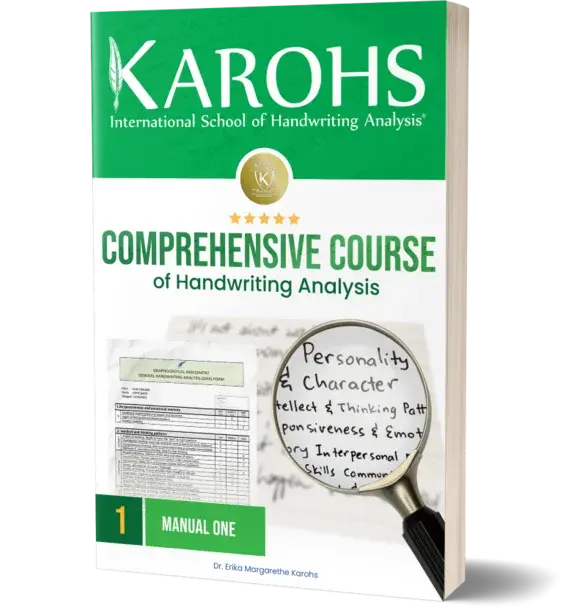
You don’t need a background in psychology to start decoding these signals. The Applicative Course by KAROHS International School of Handwriting Analysis is specifically designed for beginners, parents, coaches, and educators who want practical, actionable insights they can use immediately.
What Will You Learn in the Applicative Course:
- Core Fundamentals: Understand the primary indicators of handwriting analysis, including baseline, size, shape, and slant.
- Ten Key Personality Aspects: Explore different aspects of individuals, including emotions, social relationships, communication, potential, and possible challenges.
- Practical Application: Gain tools to bridge communications gaps, foster a supportive home environment, and guide your child through their developmental stages with confidence.
Bridge the Gap Between You and Your Child

Parenting isn’t about having all the answers, it’s about knowing when to listen when words aren’t enough. By understanding handwriting analysis, you can gain an observational lens that transforms how you see, support, and connect with your child.
Ready to unlock a deeper understanding of your child’s world?
Explore our Applicative Course and start your journey into handwriting analysis with KAROHS International School