What makes someone a good leader?
Is it confidence? The ability to make decisions? Strong communication skills? Or the way someone responds when faced with challenges?
Leadership is often associated with job titles, professional achievements, and the ability to guide others. Yet, effective leadership involves much more than simply being in charge. It also requires self-awareness, emotional understanding, and the ability to recognize both personal strengths and areas for growth.
Surprisingly, handwriting offers another perspective to explore these characteristics.
Through handwriting analysis, certain features are examined in relation to personality tendencies and leadership-related qualities. While handwriting cannot definitively determine someone’s leadership ability, it can provide an interesting starting point for exploring how different characteristics are interpreted.
Leadership Begins With Self-Awareness

Before leading others, a person needs to lead themselves first.
A leader who recognizes their strengths, limitations, and behavioral tendencies may be better prepared to navigate challenges and work with different personalities.
Self-awareness also helps individuals reflect on questions such as:
- How do I respond when making difficult decisions?
- Am I comfortable taking responsibility?
- How do I communicate my ideas to others?
- What happens when I face pressure or disagreement?
These questions are important because leadership is not defined by one personality type. Different individuals can demonstrate leadership in different ways.
Different Handwriting Features, Different Areas to Explore
Handwriting interpretation is examined through several elements. Some of these features may be explored in relation to leadership-related tendencies.
Here are a few examples:
Letter Size and Self-Expression

The size of handwriting is one of the features commonly observed in handwriting.
Larger writing is associated with a more noticeable confidence, while smaller writing may be explored in relation to a more reserved or focused approach.
In a leadership context, these interpretations can encourage us to consider how individuals express themselves and establish their presence in a group.
Slant and Interpersonal Expression
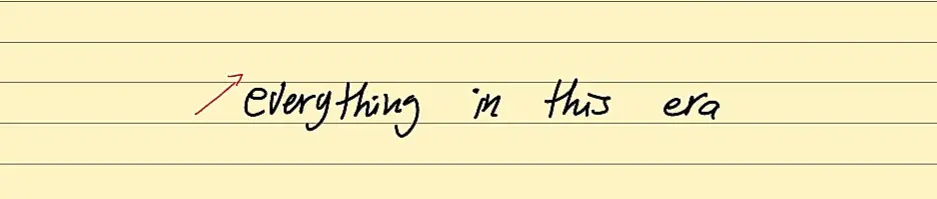
The direction of handwriting slant is another feature that may be examined.
Slant can be explored in relation to emotional expression and interpersonal tendencies.
This offers an interesting perspective when considering how someone communicates, responds to others, and builds working relationships.
There Is No Single Formula for a Good Leader

One important thing to understand about leadership is that there is no universal personality profile that guarantees success.
Some leaders are naturally expressive and comfortable speaking in front of others. Others may prefer careful planning, thoughtful decisions, and a more understated communication style.
Both approaches can contribute to effective leadership, depending on the situation and the needs of the team.
That is why understanding leadership requires looking beyond one characteristic.
Rather than searching for a single handwriting sign that supposedly identifies a leader, characters exploration considers multiple features and their relationship to one another.
Why Understanding Leadership Indicators Matters
Understanding leadership-related characteristics can be useful in several areas of personal and professional development.
For individuals, it can encourage reflection on their communication style, decision-making tendencies, and opportunities for growth.
For managers and HR professionals, understanding different personality tendencies can provide additional perspectives when developing teams, supporting employees, and improving workplace communication.
Coaches and trainers can introduce another way to facilitate conversations about personal strengths and leadership development.
Handwriting analysis should be treated as an exploratory perspective rather than a standalone method for selecting leaders, assessing job performance, or predicting professional success. Leadership decisions should also consider demonstrated skills, experience, behavior, and relevant evidence.
Explore Leadership Through the Perspective of Handwriting Analysis

If you are curious about how handwriting features are interpreted in relation to leadership, there is more to explore beyond the basic elements.
Understanding the relationship between handwriting characteristics and leadership requirements requires a structured approach. It involves observing different indicators, considering their context, and understanding how they may relate to an individual’s natural tendencies.
This is where Leadership Ability as Seen in Handwriting can be a useful learning resource. This publication explores leadership ability through handwriting while considering the requirements of leadership in the modern era.
It also introduces indicators that can be used to explore an individual’s leadership ability in relation to their natural characteristics.
Whether you are a handwriting analysis enthusiast, an HR professional, a coach, or someone interested in personal development, this eBook offers an opportunity to explore the connection between handwriting and leadership from a new perspective.
Discover a New Perspective on Leadership

Leadership is not simply about having authority over others. It is also about understanding yourself, recognizing your strengths, and continuously developing the qualities needed to guide people effectively.
Handwriting analysis offers an additional perspective for exploring these characteristics.
Ready to learn more?
Available in a secure online PDF format for online reading.