What This Article Helps You See
- A strong handwriting analysis course teaches professionals to observe patterns systematically rather than react to one striking feature in isolation.
- The real value of handwriting analysis training lies in ethical interpretation, contextual judgment, and respect for human complexity.
- Serious professional learning helps HR practitioners, coaches, psychologists, and educators understand where handwriting analysis can support insight and where its limits must remain clear.
Many people are intrigued by handwriting because it feels personal and revealing, yet professionals need more than intrigue before they trust a discipline enough to study it. As Vox notes in its reflection on what we lose when we stop writing by hand, handwriting still carries cognitive and human significance in a digital age. That is why the real question is not whether handwriting is interesting, but what a handwriting analysis course should actually teach if it is meant for responsible professional use.
Why professionals look for a handwriting analysis course in the first place
Professionals in HR, psychology, coaching, and education often look for additional ways to understand how people express themselves under pressure, structure thought, or relate to boundaries and pace. A handwriting analysis course can be appealing because it offers another lens on observable human behaviour, especially for practitioners already working with communication, development, or assessment.
Still, serious readers are usually cautious. They do not want quick personality labels or dramatic claims built on one letter shape. They want a framework that helps them ask better questions, notice patterns carefully, and stay within ethical and professional limits. That concern is valid, especially when handwriting analysis is sometimes reduced to oversimplified content online.
Used responsibly, handwriting analysis is best understood as complementary learning rather than a shortcut to judgment. For example, professionals interested in ethical foundations may find it useful to explore how to learn handwriting analysis responsibly before deciding whether formal study fits their work.
What serious course content should include
A credible handwriting analysis course should begin with structured observation. That means learning how to notice movement, spacing, pressure, size, rhythm, baseline, margins, form, and consistency without rushing toward a conclusion. Professionals should be taught to identify clusters of patterns rather than reacting to one eye-catching feature.
Just as important is pattern integration. A disciplined curriculum explains that one sign rarely means much on its own. Meaning emerges from combinations, tensions, and repeated tendencies across the whole page. This is what separates serious study from sign-by-sign simplification.
Ethical interpretation must also be central. Professionals should learn what handwriting analysis may suggest, what it cannot responsibly claim, and how context changes meaning. A person’s age, language background, writing conditions, health context, and emotional state may all affect expression on paper. Good training teaches humility, not certainty.
That is particularly important for people in people-facing roles. A psychologist, for instance, may value a course that connects writing behaviour with broader human observation while still respecting disciplinary boundaries. Readers in that field may appreciate this discussion of why comprehensive handwriting analysis study matters for psychologists.
Serious course content should also address application. In HR or coaching, handwriting analysis should never replace interviews, evidence-based assessment, or professional judgment. Instead, it may support reflection, communication insight, or developmental conversation when used carefully. KAROHS often emphasizes this practical boundary in topics such as reading handwriting without making the process intrusive.
How to recognise credible training and professional fit
When evaluating a handwriting analysis course, look for curriculum depth, not just attractive claims. Credible training should show a clear progression from fundamentals to interpretation, include guided practice, and explain limitations explicitly. Faculty quality matters as well. Professionals benefit from teachers who can connect handwriting analysis with psychology, human development, and real-world responsibility.
Certification should also be understood properly. A certificate has value when it reflects structured learning, assessment standards, and supervised interpretation, not mere attendance. In other words, handwriting analysis certification should indicate training quality and accountability, not instant expertise.
Professional fit is equally important. Some learners want broad foundations; others want applied tools for coaching, education, or workplace insight. If your interest is practical but careful application, it helps to compare claims with grounded discussions such as whether handwriting can contribute thoughtfully to job-fit conversations. The key is to choose training that respects complexity rather than promising easy answers.
KAROHS positions handwriting analysis as a structured, complementary discipline for responsible learners. For professionals, that is the right standard to expect: systematic observation, ethical interpretation, supervised development, and a clear understanding of where insight ends and overreach begins.
Questions About This Topic
Is a handwriting analysis course useful for HR professionals?
It can be useful when approached as complementary professional training. For HR professionals, the value lies in learning structured observation, ethical limits, and how handwriting analysis may support reflection on communication or behavioural tendencies without replacing interviews, references, or established assessment methods.
What separates a serious handwriting analysis course from superficial personality reading?
A serious course teaches whole-pattern observation, contextual interpretation, limitations of conclusions, and responsible application. Superficial personality reading usually relies on isolated signs, dramatic certainty, and simplified claims that do not reflect professional standards.
Should a handwriting analysis certification be enough to use the method professionally?
Certification should be seen as one part of competence, not the whole of it. Its value depends on the depth of curriculum, supervised practice, assessment quality, and the learner’s ability to apply the material ethically within their own professional boundaries.
Can psychologists, coaches, and educators study handwriting analysis without blurring professional roles?
Yes, if the training clearly explains scope and limitations. In these fields, handwriting analysis can support observation and discussion, but it should not be presented as a diagnostic tool or a replacement for the core methods of the profession.
Study Handwriting Analysis with KAROHS
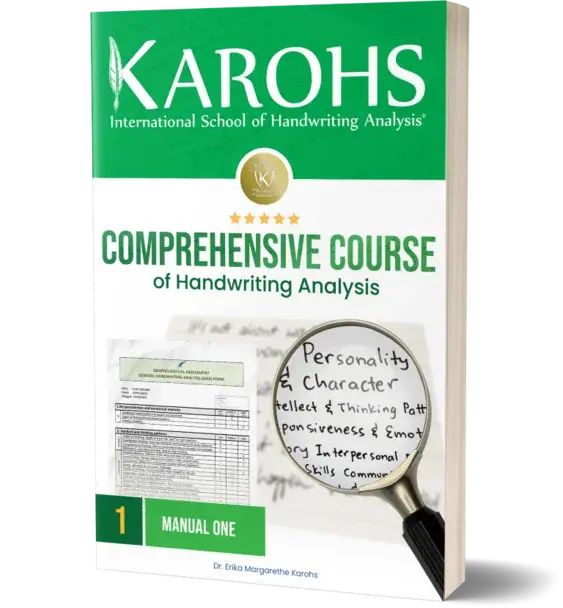
If you are evaluating whether formal study belongs in your professional development path, KAROHS offers structured learning designed around ethical interpretation, pattern-based observation, and responsible application. Explore the Comprehensive Course to see what serious foundational training in handwriting analysis looks like.