Have you ever met someone who seemed confident but rarely expressed their opinions? Or someone who appeared quiet but had a creative mind full of ideas?
Human personality is very complex. The way people think, express emotions, interact with others, and approach challenges can differ significantly, even when their outward behavior seems similar.
Understanding these differences requires more than simply observing someone’s appearance or listening to what they say.
One interesting approach to exploring personality is handwriting analysis.
Handwriting analysis examines characteristics of handwriting, such as letter formation, size, spacing, slant, and pressure, to explore interpretations of personality traits.
Through the KAROHS method, handwriting can be studied across nine essential personality aspects, offering a structured framework for exploring different dimensions of human behavior.
Let’s take a closer look at each one.

1. Emotional Responsiveness: How Do You Respond to Emotions?
Emotions influence how people experience situations, build relationships, and respond to everyday challenges.
Some individuals may express their feelings openly, while others prefer to keep their emotions private. Some may appear emotionally steady, while others are more sensitive to changes in their surroundings.
Understanding emotional responsiveness helps us explore how people experience and express their feelings.
Handwriting characteristics are examined to explore patterns associated with emotional expression and responsiveness.
Why does it matter?
Recognizing different emotional tendencies can encourage greater empathy and help us communicate with others more thoughtfully.
2. Thinking Patterns: How Do You Process Information?
Everyone has a different way of processing information.
Some people prefer logical and structured thinking. Others enjoy exploring possibilities, connecting different ideas, or approaching situations from unconventional perspectives.
Thinking patterns influence how individuals understand information, solve problems, and make decisions.
Through handwriting analysis, certain writing characteristics are interpreted to explore tendencies in thinking and information processing.
Why does it matter?
Understanding different thinking styles can help us appreciate different perspectives, improve collaboration, and recognize how people approach challenges.
3. Self-Confidence and Ego Strength: How Do You See Yourself?
Self-confidence is not always expressed through loud voices or bold actions.
Some people naturally express their opinions, while others may need more time before feeling comfortable sharing their thoughts.
This personality aspect explores how individuals perceive themselves, express their sense of identity, and approach situations that require confidence.
Why does it matter?
Understanding self-confidence can provide an opportunity to reflect on personal strengths, recognize areas for growth, and appreciate different ways people express themselves.
4. Goals and Motivational Drives: What Keeps You Moving Forward?
People have different motivations.
Some are driven by achievement and ambitious goals. Others prioritize stability, personal fulfillment, or maintaining a comfortable routine.
Motivational drives influence how individuals approach opportunities, respond to difficulties, and maintain their efforts toward something they want to achieve.
Through handwriting analysis, handwriting characteristics are explored to understand tendencies related to ambition, motivation, and personal goals.
Why does it matter?
Recognizing different motivational tendencies can help us better understand what encourages people to take action and what may affect their willingness to pursue opportunities.
5. Productivity: How Do You Approach Your Responsibilities?
Productivity is not simply about how much work someone completes.
It also involves work habits, organization, consistency, and the ability to maintain focus while completing responsibilities.
Some individuals prefer structured routines and detailed planning. Others work more spontaneously and enjoy flexibility.
Why does it matter?
Understanding different working tendencies can help individuals reflect on their habits and develop approaches that support their daily responsibilities.
6. Interpersonal Relations: How Do You Connect with Others?
Human beings build relationships in different ways.
Some people enjoy meeting new people and participating in social activities. Others feel more comfortable with a smaller circle of trusted individuals.
This aspect explores tendencies related to social interaction, interpersonal relationships, and how individuals approach connections with others.
In handwriting analysis, certain characteristics are interpreted to explore social orientation, personal boundaries, and interpersonal tendencies.
Why does it matter?
Recognizing different social preferences can help us respect personal boundaries, improve relationships, and understand why people connect in different ways.
7. Communication: How Do You Express Your Thoughts?
Communication is more than simply speaking or writing words.
It also involves how people express ideas, share opinions, respond to others, and navigate conversations.
Some individuals communicate directly and confidently. Others may prefer a more reserved, diplomatic, or thoughtful approach.
Why does it matter?
Understanding communication styles can encourage more effective interactions, reduce misunderstandings, and help people adapt their approach when communicating with others.
8. Aptitudes and Vocational Leanings: Where Might Your Strengths Lie?
People have different interests, talents, and potential areas of development.
Some may enjoy creative activities, while others feel more comfortable with analytical tasks, practical work, or activities that involve interacting with people.
This aspect explores potential aptitudes and vocational tendencies as part of a broader personality framework.
Why does it matter?
Reflecting on personal strengths and interests can help individuals explore learning opportunities, consider career directions, and identify areas they may want to develop further.
Handwriting analysis should be treated as an exploratory perspective, not a definitive career assessment or a substitute for validated aptitude testing.
9. Fears and Defenses: What Challenges May Hold You Back?
Personality exploration is not only about recognizing strengths. It also involves understanding possible fears, emotional challenges and behavioral tendencies.
Fears: Understanding The Concerns That May Hold You Back
Some individuals may worry about making mistakes, being rejected, losing control, or facing uncertainty. These concerns can influence their confidence, decision-making, and willingness to take on new challenges.
This aspect explores potential fears and underlying concerns that may shape a person’s thoughts, feelings, and responses to everyday situations. Recognizing these patterns can provide valuable insight into personal challenges and areas for growth.
Defenses: Understanding How You Protect Yourself
When facing criticism, emotional pressure, or uncomfortable situations, people develop different ways of protecting themselves.
Some may avoid confrontation, while others become guarded, withdraw from situations, or respond defensively when they feel threatened. These actions can influence how they communicate, handle conflict, and build relationships.
Why does it matter?
Recognizing potential challenges can encourage self-reflection and help us become more aware of how we respond to difficult situations.
It is important to remember that handwriting interpretations are not psychological diagnoses. Understanding someone’s challenges requires broader context and, when appropriate, professional assessment.
Bringing the Nine Personality Aspects Together

Each personality aspect offers a different perspective on human behavior.
However, personality cannot be understood through a single characteristic alone.
Emotional responsiveness, thinking patterns, confidence, motivation, productivity, interpersonal relations, communication, aptitudes, and fears can all contribute to a broader picture of an individual.
This is why learning a structured approach to handwriting analysis can be valuable.
Rather than focusing on isolated handwriting characteristics, the KAROHS method introduces learners to a framework for exploring these nine personality aspects systematically.
The purpose is to develop a broader perspective on personality and encourage more thoughtful self-reflection and interpersonal understanding.
Start Exploring Personality Through Applicative Course
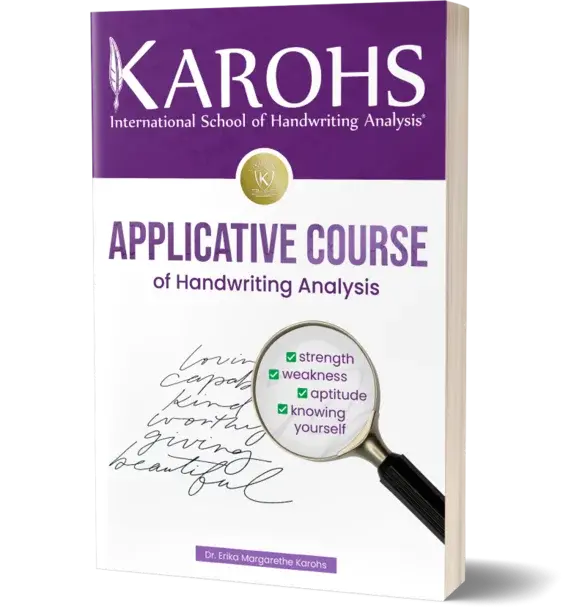
Interested in learning how these nine personality aspects are explored through handwriting?
The KAROHS School Applicative Course of Handwriting Analysis is designed for beginners who want to understand the fundamentals of handwriting analysis and apply what they learn in everyday life.
Through this course, you will explore:
- Nine essential personality aspects using the KAROHS method.
- 40 key personality traits.
- Handwriting interpretation through structured learning materials.
- Practical exercises using profile analysis worksheets.
- Self-tests and model answers to evaluate your understanding.
- A Dictionary of Personality Traits featuring more than 133 traits as a learning resource.
The course also includes a self-paced learning format, allowing you to study according to your own schedule.
You don’t need a formal psychology background or previous handwriting analysis to get started.
Whether you’re interested in self-development, working with people, education, coaching, or simply exploring human personality, the Applicative Course can be a practical starting point.
Every Person Has More Than One Side. Start Exploring Them.

Understanding personality takes curiosity, observation, and a willingness to look beyond first impressions.
The nine personality aspects provide a framework for exploring different dimensions of human behavior, from emotional responses and thinking patterns to communication, motivation, and potential challenges.
And your journey into understanding people can begin with something as familiar as handwriting.
Discover the nine personality aspects and learn how to explore them through handwriting with the KAROHS School Applicative Course.